
Introduction

Technology is changing the way businesses communicate with customers. A few years ago, most marketing activities depended on traditional methods, manual research, and direct communication. Today, businesses have access to advanced digital tools that help them understand customer behaviour, create content, and promote their products more effectively. One of the biggest developments behind this change is Artificial Intelligence (AI).
Artificial Intelligence is becoming an important part of modern marketing. It allows businesses to study large amounts of information, understand customer interests, automate repetitive tasks, and deliver more relevant experiences. From personalised product recommendations to AI-powered chatbots, many marketing activities are now becoming faster and more efficient.
AI is not only useful for large companies. Small businesses, startups, freelancers, and digital marketing beginners can also use AI-powered tools to improve their marketing activities. However, using AI successfully requires proper planning, creativity, and human involvement.Artificial Intelligence in Marketing helps businesses understand their customers better.
In this blog, we will explore the role of Artificial Intelligence in modern marketing, its benefits, practical applications, challenges, and future possibilities.
1. Understanding Artificial Intelligence in Marketing
Artificial Intelligence refers to technology that enables computer systems to perform tasks that usually require human intelligence. These tasks include learning from information, recognising patterns, understanding language, and making predictions.
In marketing, AI helps businesses understand what customers need and how they interact with products and services. It can process customer information and identify patterns that may be difficult to notice manually.
For example, an online shopping website can use AI to understand a customer’s browsing history and recommend products that match their interests. Similarly, a digital marketing team can use AI tools to study campaign performance and identify areas that need improvement.
AI does not replace the complete marketing process. Instead, it supports marketers by providing useful information and helping them make better decisions.
2. Personalised Customer Experiences
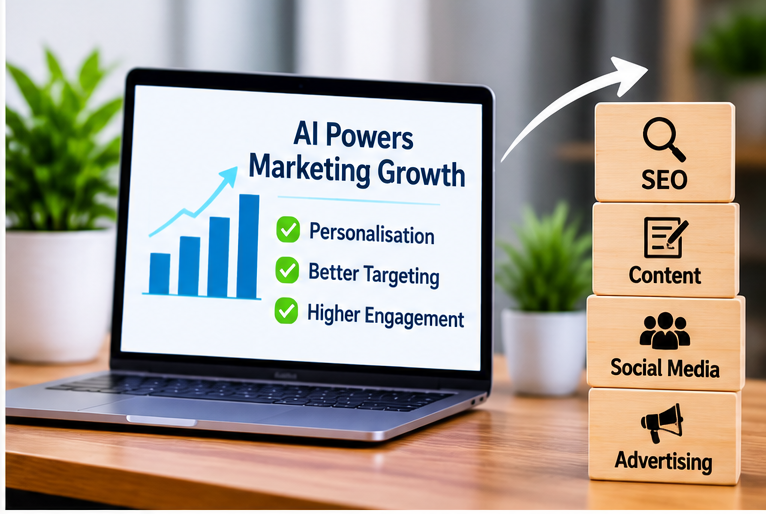
Every customer has different interests, preferences, and purchasing habits. Traditional marketing often uses the same message for a large audience. However, modern customers expect businesses to understand their individual needs.
AI makes personalisation easier by analysing customer behaviour, previous purchases, browsing activity, and interests.
For example, when someone regularly searches for fitness products on an online shopping website, the platform may recommend related products such as sports shoes, workout clothes, or fitness equipment.
Email marketing platforms can also use AI to suggest relevant products and send messages based on customer interests.Today, Artificial Intelligence in Marketing is changing the way companies promote their products.
Personalised experiences make marketing messages more meaningful. Customers are more likely to pay attention to information that matches their needs rather than receiving unrelated advertisements.
3. AI in Content Creation and Content Marketing
Content marketing plays an important role in attracting and educating online audiences. Businesses regularly create blog posts, social media captions, advertisements, email newsletters, and website content.
However, producing fresh content consistently can take a lot of time. AI tools can support content creators by generating ideas, preparing outlines, suggesting headlines, and improving grammar.
For example, a digital marketer who wants to write a blog about SEO can use an AI tool to discover possible subtopics and organise the content into sections.Artificial Intelligence in Marketing helps brands create more personalised customer experiences.
AI can also help create different versions of social media captions for different platforms.
Some popular AI-powered tools used for content-related tasks include ChatGPT, Grammarly, and Canva’s AI features.Content creators can use Artificial Intelligence in Marketing tools to develop new ideas.
However, AI-generated content should not be published without reviewing it. Marketers must check facts, improve the language, add original ideas, and make sure the final content matches the brand’s voice.
The best results come when AI supports human creativity instead of replacing it.
4. Improving Customer Support with AI Chatbots
Customer support is an important part of every business. Customers may have questions about products, prices, delivery, payments, or services. If they cannot receive quick answers, they may become frustrated or choose another business.
AI-powered chatbots help businesses respond to common questions automatically.Businesses use Artificial Intelligence in Marketing to analyse customer behaviour.
For example, an online clothing store can use a chatbot to answer questions about product availability, delivery charges, return policies, and order status.
One advantage of chatbots is that they can provide support outside normal business hours. This helps customers receive basic information without waiting for a human representative.
However, chatbots cannot handle every situation perfectly. Complicated complaints, emotional conversations, and unusual requests may require human support.
Therefore, businesses should combine automated assistance with personal customer service to provide a better experience.
5. AI in Search Engine Optimisation (SEO)
Search Engine Optimisation helps websites improve their visibility on search engines. AI is changing SEO by making research, analysis, and optimisation activities more efficient.
AI-powered SEO tools can help marketers identify keyword opportunities, analyse competitors, understand search trends, and find content improvement suggestions.
For example, a business that sells handmade products can use keyword research tools to discover what potential customers are searching for online.Artificial Intelligence in Marketing makes digital advertising more effective.
AI can also support content planning by identifying related topics and questions that users frequently ask.
Some SEO platforms use machine learning to provide recommendations based on website performance and search data.Artificial Intelligence in Marketing helps businesses understand market trends.
However, successful SEO still depends on useful information, relevant keywords, website quality, and a positive user experience. Using AI-generated content without checking its accuracy or value will not automatically improve search rankings.
The main goal should always be to create helpful content for real people.
6. Better Social Media Marketing Strategies
Social media platforms have become important marketing channels for businesses. Brands use Instagram, Facebook, LinkedIn, YouTube, and other platforms to reach audiences and build relationships.
Managing social media accounts requires regular content creation, audience interaction, performance tracking, and planning.One major benefit of Artificial Intelligence in Marketing is saving time.
AI tools can make several of these activities easier.
For example, AI can help marketers:
- Generate creative post ideas.
- Suggest captions and hashtags.
- Plan content calendars.
- Analyse audience engagement.
- Identify suitable posting patterns.
- Create basic visual content.
AI-powered analytics can also help businesses understand which posts receive more attention and what type of content their audience prefers.
However, social media should not become completely automated. Real conversations, personal experiences, and creative storytelling are still important for building genuine relationships with followers.
7. AI in Digital Advertising and Campaign Optimisation
Online advertising allows businesses to promote their products through platforms such as Google Ads and Meta Ads.
Managing advertising campaigns involves selecting audiences, creating advertisements, controlling budgets, and measuring results.
AI helps advertisers analyse campaign data and identify opportunities for improvement.Artificial Intelligence in Marketing helps marketers make better decisions using data.
For example, automated advertising systems can use available campaign signals to help select audiences, adjust bidding strategies, and distribute advertisements.
Google Ads offers AI-powered features that support campaign optimisation. Meta also uses machine learning systems to help deliver advertisements to relevant audiences.
These technologies can save time and improve campaign efficiency.
However, marketers should not depend completely on automated recommendations. They must monitor advertising expenses, review campaign performance, check audience quality, and ensure that advertisements follow business goals.
A successful advertising campaign needs both smart technology and human decision-making.
8. Understanding Customer Behaviour Through Data Analysis
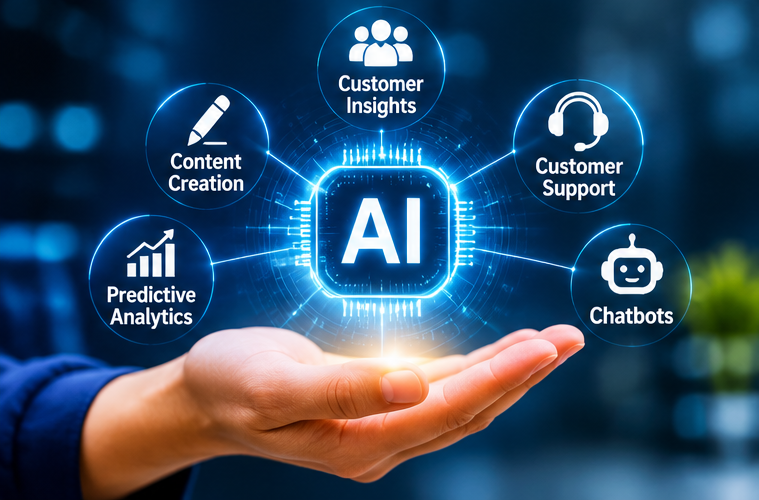
Understanding customer behaviour is one of the most important parts of marketing. Businesses need to know what customers like, what problems they face, and what influences their purchasing decisions.
AI can analyse large amounts of customer data and identify patterns that help marketers understand their audiences.
For example, an online store may discover that many customers visit a product page but leave without completing their purchases. By studying this behaviour, the business can investigate possible reasons, such as high delivery charges, confusing checkout steps, or limited payment options.
AI can also help identify customer groups with similar interests and behaviours.
These insights allow businesses to improve their websites, marketing messages, and customer experiences.
However, businesses should collect and use customer information responsibly. Data privacy and customer consent must remain important priorities.
9. Predictive Marketing and Future Customer Needs
Predictive marketing uses data and analytical methods to estimate possible future customer behaviour.
AI can study historical information and identify patterns that may help businesses plan their marketing activities.
For example, a travel company may analyse previous booking patterns to understand which destinations become popular during holiday seasons.
An online retailer may use past purchasing information to estimate which products could receive higher demand during a festival period.Small businesses can also benefit from Artificial Intelligence in Marketing tools.
These predictions help businesses plan inventory, prepare marketing campaigns, and manage resources more effectively.
However, predictions are not guarantees. Customer behaviour can change because of economic conditions, personal preferences, competition, or unexpected events.Artificial Intelligence in Marketing improves the way brands communicate with customers.
Businesses should use AI predictions as guidance and combine them with human judgement.
10. Popular AI Tools Used in Modern Marketing
Many AI-powered tools are available to support different marketing activities. Choosing the right tool depends on the business objective, budget, and type of work.Social media platforms use Artificial Intelligence in Marketing to show relevant content to users
Some commonly used tools include:
ChatGPT: Helps with brainstorming, content outlines, writing assistance, marketing ideas, and customer communication drafts.
Canva AI: Supports graphic design and helps users create visual content for social media, presentations, and marketing materials.
Grammarly: Helps improve grammar, spelling, clarity, and writing style.
HubSpot: Offers marketing and customer relationship management features, including AI-supported capabilities.
Semrush: Provides SEO and digital marketing research tools, with AI-supported features for content and marketing analysis.
Google Analytics: Helps businesses understand website traffic, visitor behaviour, and marketing performance, with some AI-powered insights and predictive capabilities.
These tools can make marketing tasks easier, but users should understand their features and limitations before depending on them.
11. Challenges and Limitations of AI in Marketing
Although AI offers many advantages, it also creates certain challenges.
Lack of Human Emotion: AI can generate messages, but it may not fully understand human feelings, personal experiences, or cultural differences. Human creativity is still necessary for meaningful communication.
Incorrect Information: AI tools sometimes produce inaccurate or outdated information. Marketers must verify important details before publishing content.
Data Privacy: AI systems may use customer information to provide personalised experiences. Businesses must handle this information carefully and follow applicable privacy requirements.
High Dependence on Automation: Depending too much on AI can make marketing communication repetitive and less personal.
Cost and Learning: Some advanced AI tools require paid subscriptions. Beginners may also need time to understand how to use them effectively.
Understanding these limitations helps businesses use AI more responsibly and achieve better results.Artificial Intelligence in Marketing supports better audience targeting.
12. The Future of Artificial Intelligence in Marketing
The role of AI in marketing is expected to continue growing. As technology develops, businesses may find new ways to communicate with customers and improve their marketing strategies.
Voice-based search, conversational AI, intelligent customer support, advanced personalisation, and automated data analysis are some areas that may become increasingly important.
AI may also help marketers create more interactive experiences through personalised recommendations and intelligent digital assistants.
However, technology alone will not decide the success of a brand. Customers will continue to value honesty, creativity, transparency, and meaningful relationships.The future of Artificial Intelligence in Marketing will bring new opportunities for digital marketers.
Marketers who learn to combine AI tools with communication skills, strategic thinking, and original ideas will be better prepared for changes in the digital marketing industry.
Conclusion
Artificial Intelligence has become an important part of modern marketing. It helps businesses understand customer behaviour, create content, improve SEO, manage social media, support advertising campaigns, and provide faster customer service.
For small businesses and beginners, AI offers opportunities to perform marketing tasks more efficiently without depending entirely on large teams.
At the same time, AI should be treated as a supporting tool rather than a complete replacement for human creativity and decision-making. Every piece of content needs proper review, every marketing strategy needs a clear purpose, and every customer interaction should be handled with care.
The future of marketing will not simply belong to businesses that use the most advanced technology. It will belong to brands that know how to use technology wisely while maintaining genuine connections with people.
By combining Artificial Intelligence with human creativity and responsible marketing practices, businesses can create better customer experiences and build stronger relationships in the digital world.Learning about Artificial Intelligence in Marketing is important for beginners who want to build a career in digital marketing.